
Washind Sand
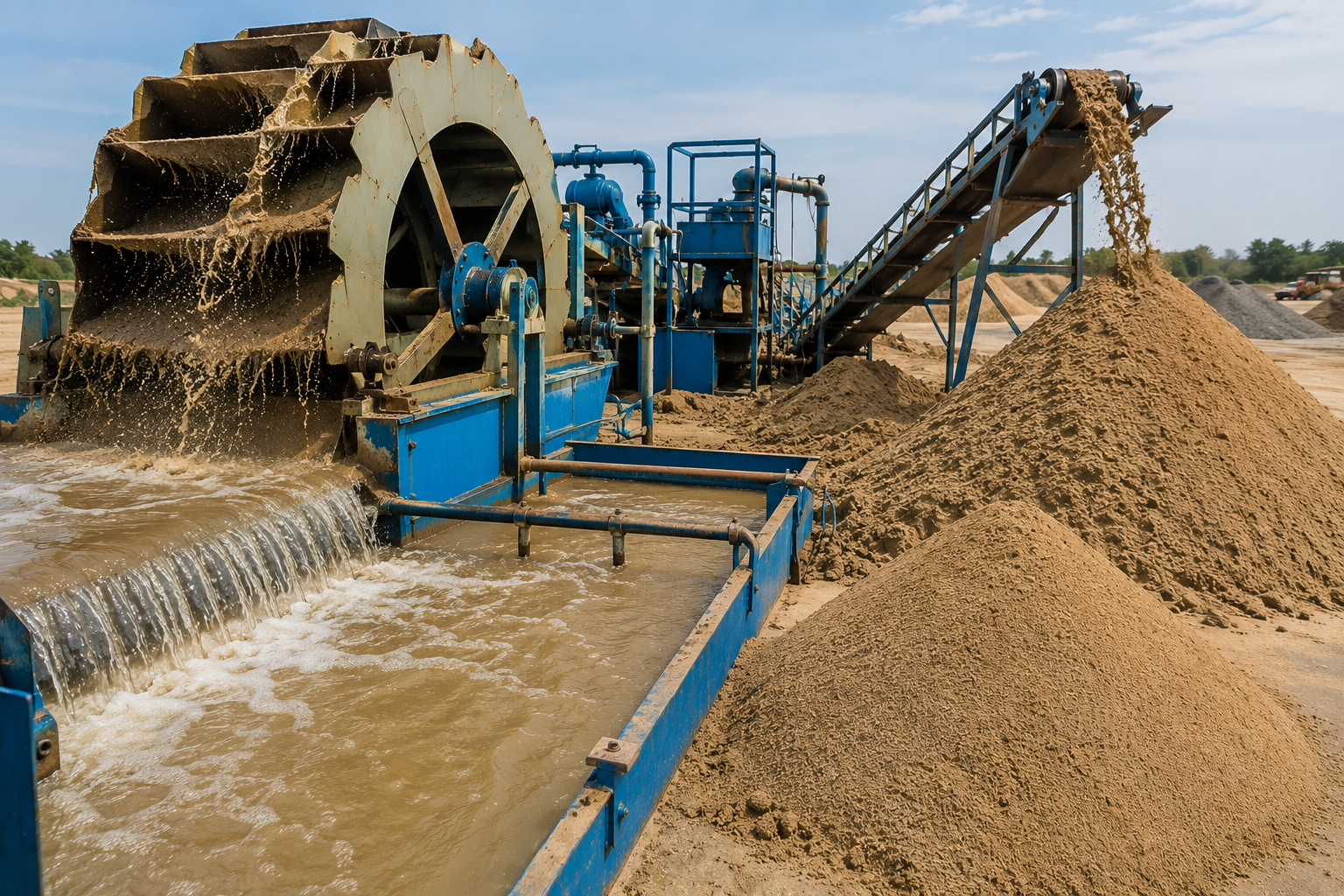
Washing sand is a carefully processed construction material that undergoes a cleaning procedure to remove unwanted impurities such as silt, clay, dust, organic matter, salts, and fine particles. The washing process is carried out using water and specialized equipment, including sand washing machines, hydrocyclones, and screening systems. During this process, raw sand extracted from rivers, quarries, or manufactured sources is thoroughly cleaned to improve its quality, consistency, and performance. The result is a high-grade, well-graded sand with uniform particle sizes that meets construction standards and provides superior strength and durability in various applications.
Washed sand is widely used in the construction industry because of its excellent binding properties and cleanliness. It is commonly utilized in concrete production, masonry work, plastering, paving blocks, floor screeds, and landscaping projects. By removing excessive fines and contaminants, washed sand ensures better adhesion between cement and aggregates, reducing the chances of cracks, shrinkage, and structural weaknesses. It also enhances the workability of concrete and mortar, making the mixing process smoother and more efficient for contractors and builders. In addition, washed sand improves drainage characteristics, making it suitable for applications such as sports fields, golf courses, playgrounds, and filtration systems.
One of the major advantages of washing sand is the improved quality and reliability it brings to construction projects. Impurities such as clay and organic materials can interfere with the hydration process of cement and negatively affect the strength of the finished structure. Washed sand minimizes these risks by providing a cleaner and more stable material that complies with engineering specifications. Although the washing process requires additional time, equipment, and water, the long-term benefits—including enhanced durability, stronger construction, reduced maintenance, and better overall performance—make washed sand a preferred choice for residential, commercial, and infrastructure developments. For builders seeking high-quality construction materials, washed sand represents an investment in safety, longevity, and superior workmanship.
Projects That Use Washed Sand
- Residential Construction Projects
- Commercial Buildings
- Roads and Infrastructure Development
- Precast Concrete Products
- Landscaping and Sports Facilities
- Water Filtration Systems
Benefits of Using Washed Sand
- Superior Strength
- Better Durability
- Improved Workability
- Higher Quality Finish
- Enhanced Drainage
- Compliance with Construction Standards
- Reduced Risk of Structural Problems
- Long-Term Cost Savings
Pros of Washed Sand
1. Higher Strength and Better Bonding
One of the biggest advantages of washed sand is its ability to create stronger concrete and mortar. Since harmful impurities are removed during the washing process, cement can bond more effectively with the sand particles. This results in improved compressive strength and better structural performance.
2. Improved Durability
Structures built using washed sand tend to last longer because they are less prone to cracking, shrinkage, and deterioration. Clean sand reduces the risk of weak spots in concrete and masonry, helping buildings withstand environmental stresses over time.
3. Excellent Workability
Washed sand has a consistent particle size and texture, making it easier to mix with cement and water. Masons and contractors often prefer it because it spreads smoothly during plastering and allows for easier finishing in concrete applications.
4. Better Surface Finish
For plastering, masonry joints, and decorative concrete, washed sand provides a smoother and more attractive finish. The absence of excessive dust and clay helps achieve a cleaner appearance.
5. Compliance with Quality Standards
Many engineering specifications and construction standards recommend or require clean, washed sand for structural applications. This ensures reliability and consistent performance across projects.
6. Improved Drainage
Washed sand allows water to flow more freely due to the removal of fine particles. This makes it ideal for landscaping, playgrounds, sports fields, and drainage systems where water permeability is important.
7. Reduced Maintenance Costs
Because washed sand contributes to stronger and more durable structures, it can help reduce future repair and maintenance expenses associated with cracking and material failure.
Cons of Washed Sand
1. Higher Cost
The washing process requires specialized equipment, water, energy, and additional handling. As a result, washed sand is generally more expensive than unwashed or untreated sand.
2. Increased Water Consumption
Producing washed sand requires a significant amount of water. In regions facing water shortages, this can raise environmental and sustainability concerns if proper recycling systems are not used.
3. Limited Availability in Some Areas
Not all suppliers have washing facilities. In certain locations, washed sand may be difficult to source, leading to transportation costs and potential delays.
4. Environmental Impact
If wastewater generated during the washing process is not properly managed, it can affect nearby ecosystems. Responsible producers address this issue through water recycling and sediment management systems.
5. May Not Be Necessary for Every Project
For non-structural applications, such as temporary fills or low-strength works, the added cost of washed sand may not provide significant benefits. In such cases, using unwashed sand could be more economical.
6. Potential Material Loss
During washing, some fine particles are removed along with impurities. If not carefully controlled, excessive washing can reduce the yield of usable material and increase production costs.
7. Requires Proper Storage and Handling
Another disadvantage of washed sand is that it requires proper storage and handling after processing. Because washed sand contains moisture from the cleaning process, it can become compacted or develop inconsistent moisture levels if left exposed to rain or stored improperly. This variation in moisture content can affect the water-to-cement ratio during concrete mixing, leading to inconsistencies in workability and strength if not adjusted correctly. Contractors often need additional care, covered storage areas, and moisture monitoring to maintain the quality of washed sand before use, which can increase site management efforts and operational costs.